
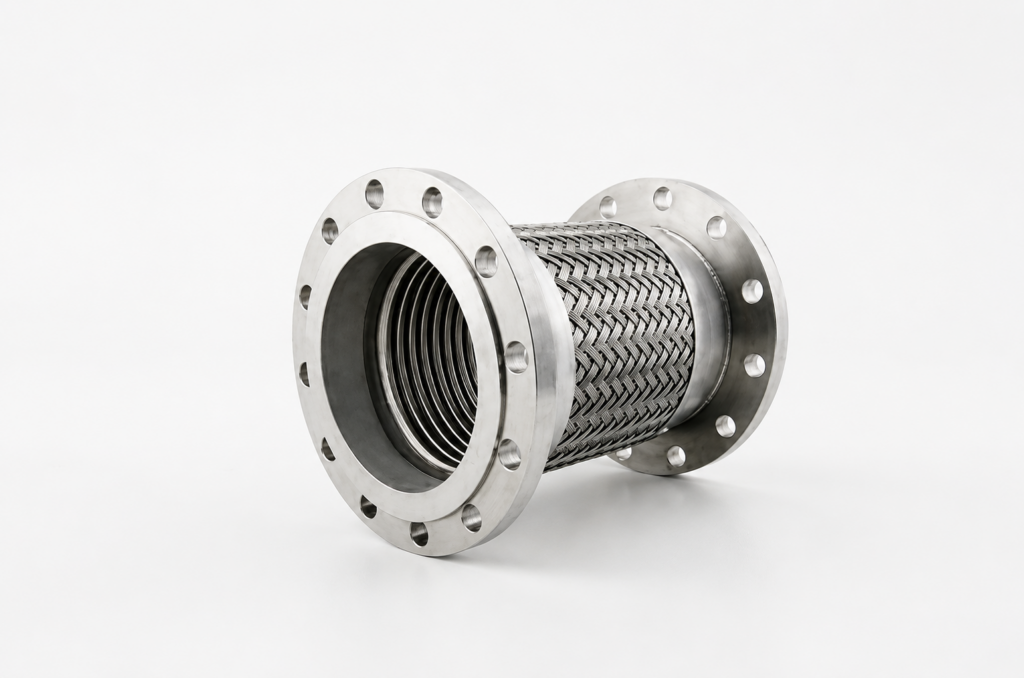
In industrial piping systems, SUS304 and SUS316L are commonly used for equipment such as flexible hoses, quick couplings, valves, and pipe fittings. Although they may look similar, their corrosion resistance and suitability for different operating environments can vary significantly.
Choosing the correct stainless steel grade can directly affect system reliability, safety, and service life.
What is SUS304?
SUS304 is one of the most widely used stainless steel grades in industrial applications. It provides good mechanical strength and corrosion resistance under many general operating conditions while also being relatively easy to clean and maintain.
It is commonly considered for general applications involving water, hot water, steam, food processing, and industrial services where highly corrosive chemicals or environments are not present.
How is SUS316L Different from SUS304?
One important difference is the addition of molybdenum (Mo) in SUS316L. Molybdenum improves resistance to certain forms of corrosion, particularly in environments containing chlorides and some chemicals.
The “L” stands for Low Carbon, which helps reduce the risk of corrosion in heat-affected areas associated with welding.
For this reason, SUS316L is commonly considered for chemical processing, food and pharmaceutical applications, and other environments where greater corrosion resistance is required.
Which One Should You Choose?
For general industrial applications without highly corrosive media, SUS304 can provide a practical and cost-effective solution.
For applications involving chemicals, chlorides, or more corrosive operating environments, SUS316L may provide better corrosion resistance and longer service life.
However, stainless steel selection should never be based on material grade alone. Fluid type and concentration, operating temperature, pressure, and environmental conditions should all be evaluated before selecting equipment for an industrial piping system.