


In industrial applications, selecting high-quality flexible hoses and fittings is essential, but proper engineering installation is the key to ensuring maximum system efficiency and safety. In this article, Thaiflex summarizes crucial technical guidelines (Installation Hints) to help you apply correct installation practices on-site.
1. Key Installation Hints
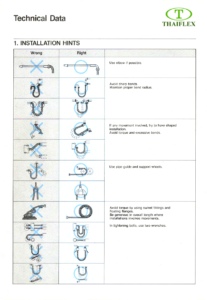
Improper installation can lead to torque, sharp bends, and excessive mechanical stress, ultimately causing leaks and premature hose failure. Follow these best practices:
- Avoid Sharp Bends & Maintain Proper Bend Radius:
- What to do: Always respect the minimum bend radius specified for the hose. Never force sharp or abrupt bends that strain the hose wall.
- Use Elbows When Possible:
- What to do: If the piping layout requires a sharp directional change, use an elbow fitting rather than forcing the flexible hose into a tight corner.
- Accommodate Movements with Shaped Installation:
- What to do: If the application involves movement or vibration, design a shaped installation with generous overall length. Avoid torque by utilizing swivel fittings and floating flanges to absorb motion naturally.
- Utilize Pipe Guides and Support Wheels:
- What to do: For dynamic applications with linear or recurring movement, incorporate pipe guides and support wheels to prevent sagging, dragging, and friction wear.
- Use Two Wrenches When Tightening Bolts:
- What to do: Always use two wrenches when tightening bolts—one to hold the fitting steady and the other to torque the fastener. This prevents the hose assembly from twisting and damaging the inner structure.
Paying attention to these installation details minimizes equipment downtime, reduces maintenance costs, and enhances operational safety on-site. For expert advice or custom hose solutions, feel free to contact the Thaiflex team!